
The Friday-night failure points
Every restaurant knows these. The question is whether your system causes them or absorbs them.
Servers walk miles
Every order and every card walks back to a fixed till, turning service into laps of the room.
Kitchen tickets go rogue
Handwritten or re-keyed orders get misread, lost, or fired out of sequence at the worst moment.
Split bills stall tables
Six ways, two cards and one voucher — and the table sits blocked while the till struggles.
Tips cause friction
Gratuities handled loosely create awkward moments for guests and disputes for staff.
Apps own your orders
Delivery platforms take their cut and keep the customer data — and their tablet clutters the pass.
Till and terminal disagree
POS from one vendor, payments from another: mismatched totals, double admin, two support lines.
What changes with Shift4
Order and pay at the table
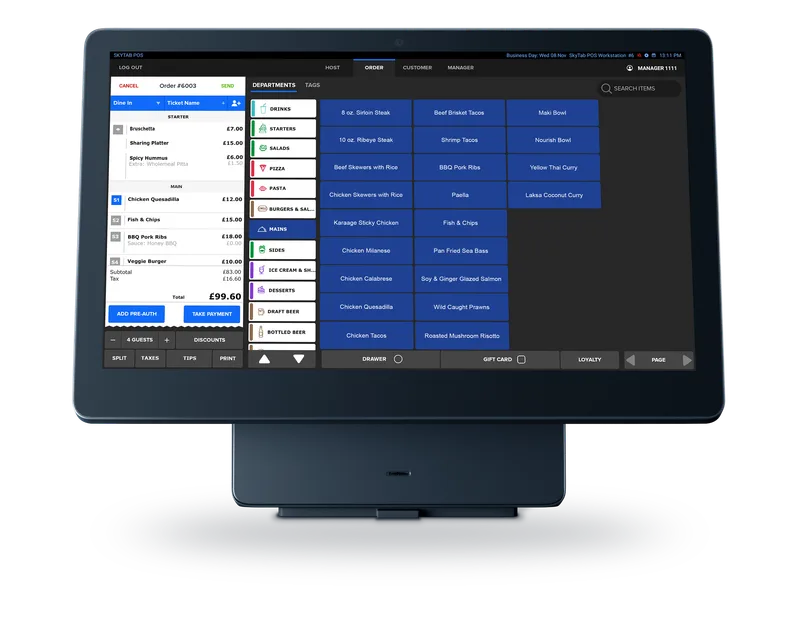
Handhelds carry the menu, the order and the payment — courses fire to the kitchen instantly, and the bill settles tableside with tips and splits handled.
A kitchen that reads every ticket
The Kitchen Display System sequences dine-in, takeaway and delivery orders legibly — with a bump bar for wet hands.
Online ordering in the same flow
Native online ordering and delivery-platform integrations land in the same POS and kitchen queue as the room.
One system, one support line
Payments, POS, loyalty and gift cards from one provider — with unified reporting and one number when something needs fixing.
Start with the part that hurts most
It's one platform, so you can lead with the till, the card machine, or both — the review tells you which.
Gift cards fill January tables
Built-in gift cards turn December goodwill into January bookings — and loyalty keeps the regulars regular.
Opening a restaurant?
Plan table service, kitchen routing, pay-at-table, tips, online orders and card payments before the first service — not after it exposes the gaps.