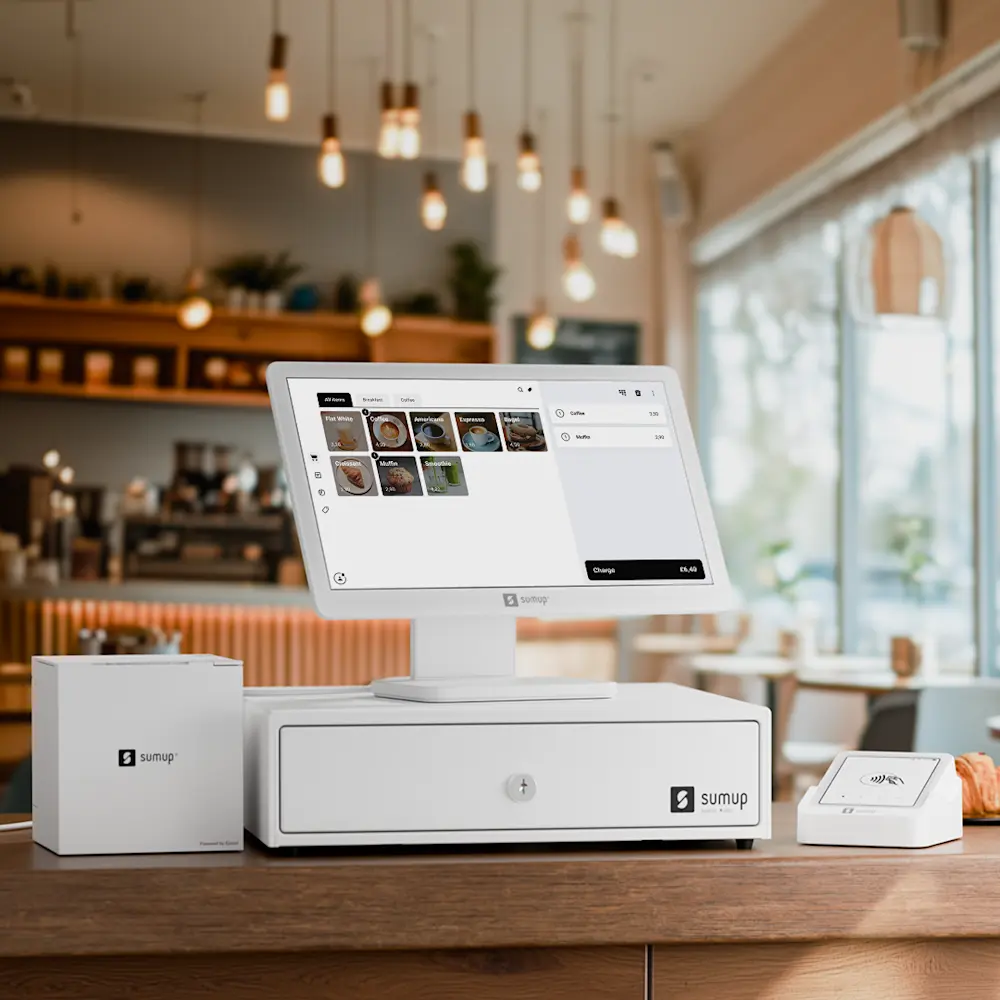
What type of business do you run?
We tailor our recommendations to how your specific trade works.
Sound familiar?
These are the operational issues that signal a POS system could make a meaningful difference.
Slow service at peak
Queues build because ordering and payment happen at the same bottleneck.
Order errors
Manual order-taking leads to mistakes, especially during busy periods.
Disconnected systems
Separate tills, kitchen displays, and payment devices that don't talk to each other.
No clear view of trade
No easy way to see what's selling, when you're busiest, or where you're losing margin.
Staff bottleneck
Staff are tied up taking orders when they should be serving or preparing.
Scaling friction
Adding a second location or a delivery channel means starting from scratch.
Before and after
What changes when you move to the right POS setup.
Before
- Verbal orders, handwritten tickets
- Separate payment terminal
- No clear sales data
- Queues during peak hours
- Staff tied to the till
After
- Digital order flow, kitchen routing
- Integrated card payments
- Real-time reporting
- Faster throughput at peak
- Staff free to serve and prepare
Setup levels
Start where it makes sense. Scale when you need to.
POS Lite
Entry-level Android POS
£229 + VAT
£274.80 inc. VAT. POS Lite + Solo bundle. Free POS software. No monthly fee. Free shipping.
- Order management
- Integrated payments via Solo reader
- Receipt printing
- Basic reporting
- Menu management
- Upgrade to POS Plus (£29/mo) for multi-device sync and table planning
POS Plus
Full service flow with multi-device sync
£29/month
12-month subscription. Hardware costs separate. Enables Terminal sync and table management.
- Everything in POS Lite
- Kitchen display routing
- Table planning
- Multi-device sync — start an order at the bar, finish at the table
- Advanced reporting
- Terminal card reader compatible
POS Pro & Kiosk
iPad-based, scalable, self-service
Contact us
Pricing confirmed through our team. Works on iPads you may already own.
- iPad-based POS
- Self-service kiosk option
- Multi-site capable
- Allergen tracking & product modifiers
- Delivery integrations
- Dedicated onboarding support
Start an order at the bar. Finish it at the table.
How POS Plus multi-device sync works in practice.
With a POS Plus subscription, a SumUp Terminal card reader and a POS Lite tablet stay in sync. A customer can start a drinks order at the bar and add food at their table — all appearing as one order, routed to the kitchen in sequence.
For restaurants, it means servers can take orders on a Terminal at the table and send them directly to a kitchen printer or display — without going back to a central terminal. Fewer errors. Faster service.
For cafés with a counter and a separate seating area, it means one system that covers both without duplication.
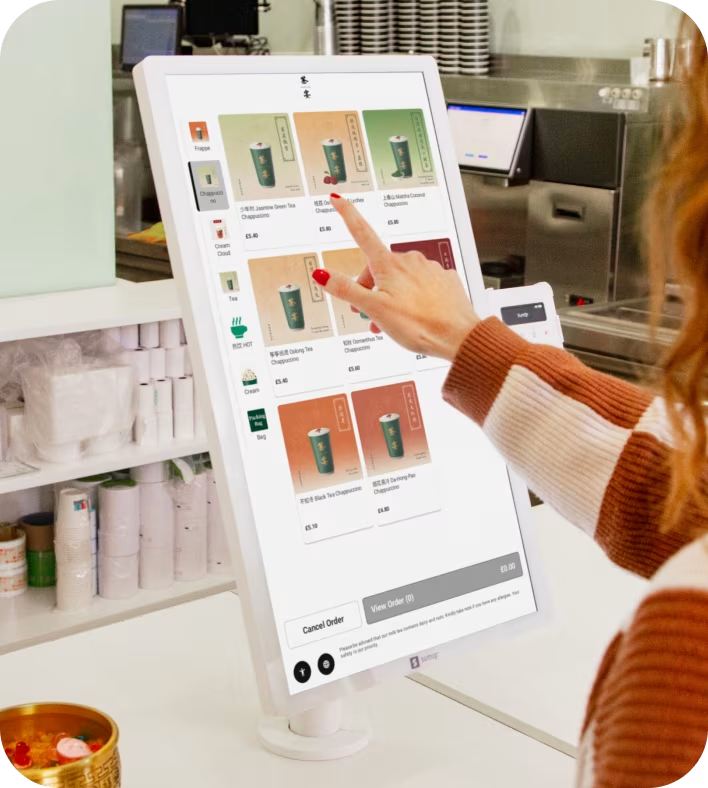
Self-service kiosk
For high-volume ordering environments where queue pressure is the problem.
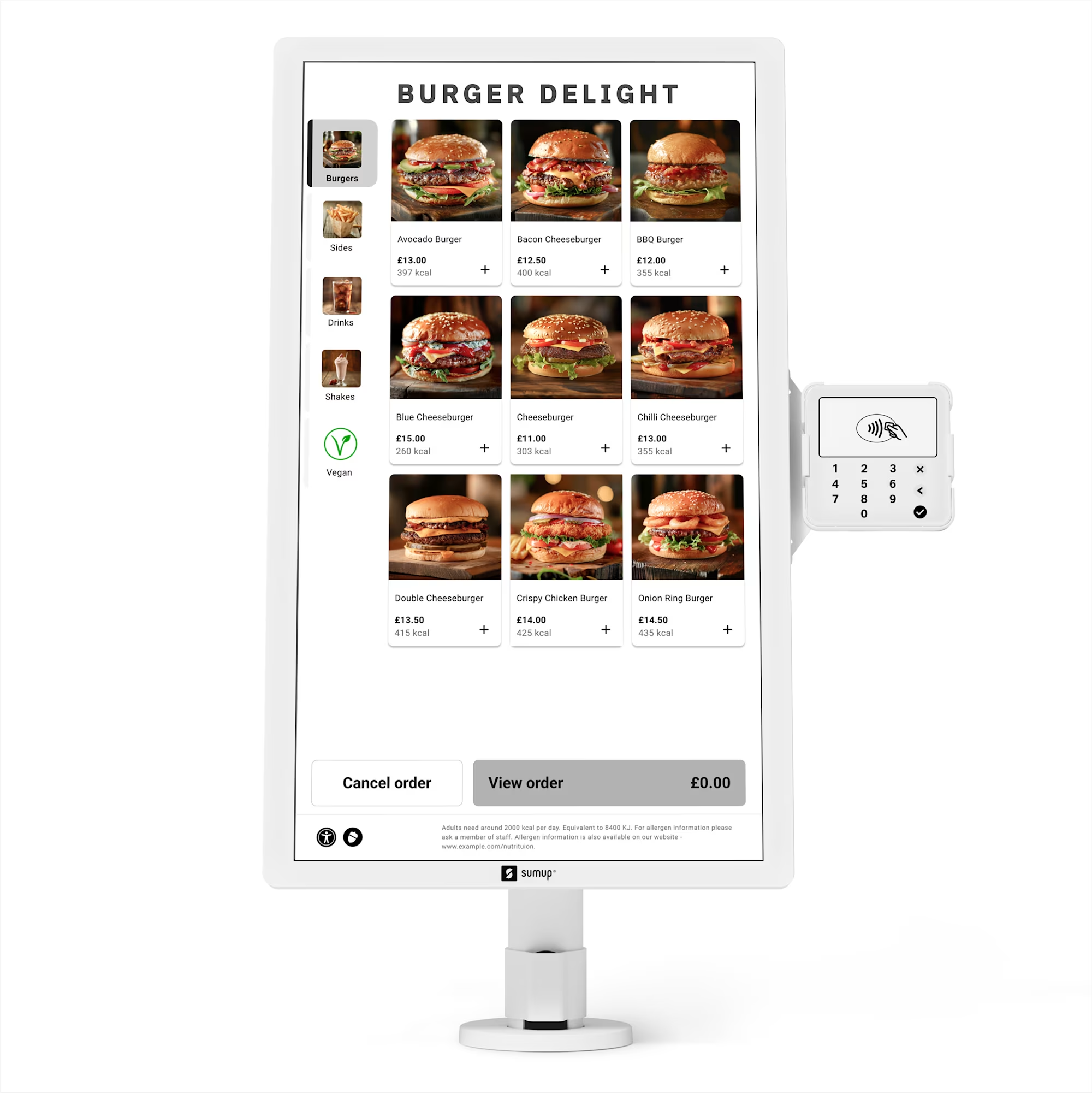
A kiosk handles simple repeat orders — the same 5 or 6 items most customers choose — without needing a staff member at the counter. Counter staff are freed for preparation and fulfilment.
Kiosk hardware and software pricing is tailored to your setup. It is sold through SumUp's Inside Sales team, who handle onboarding and configuration. Book a review and we will connect you with the right people.
How it works in practice
Real-world operational scenarios — not fabricated reviews.
Morning rush, one staff member
A busy café with a single counter staff member during the morning rush. Orders were verbal, payment was separate, and the queue backed up to the door by 8:15am.
What changed
A counter POS with integrated payment cut the average transaction time and freed the staff member to focus on preparation between orders.
Kitchen handoff chaos
A high-volume takeaway was using paper tickets written by counter staff and passed to the kitchen. During peak periods, orders were lost, delayed, or made incorrectly.
What changed
A POS with kitchen display routing removed the paper handoff entirely. Orders appeared on screen the moment they were confirmed.
Table service with split payments
A sit-down restaurant found splitting bills at the table was slow, awkward, and often wrong. Staff spent too long at each table during the evening rush.
What changed
A POS with table management and built-in split-payment flow let servers handle it at the table in seconds.
Self-order queue relief
A takeaway with consistent lunch queues wanted to speed up ordering without adding staff. Many customers ordered the same 5–6 items every visit.
What changed
A self-service kiosk handled simple repeat orders, freeing counter staff for phone orders and collections.